

Which muscle massager is best for your recovery routine?
Compare smooth rolling massagers, portable percussion guns, vibrating foam rollers and manual options by sensation, coverage, portability and ease of use.
Reviewed 25 August 2026 · Features and availability can change
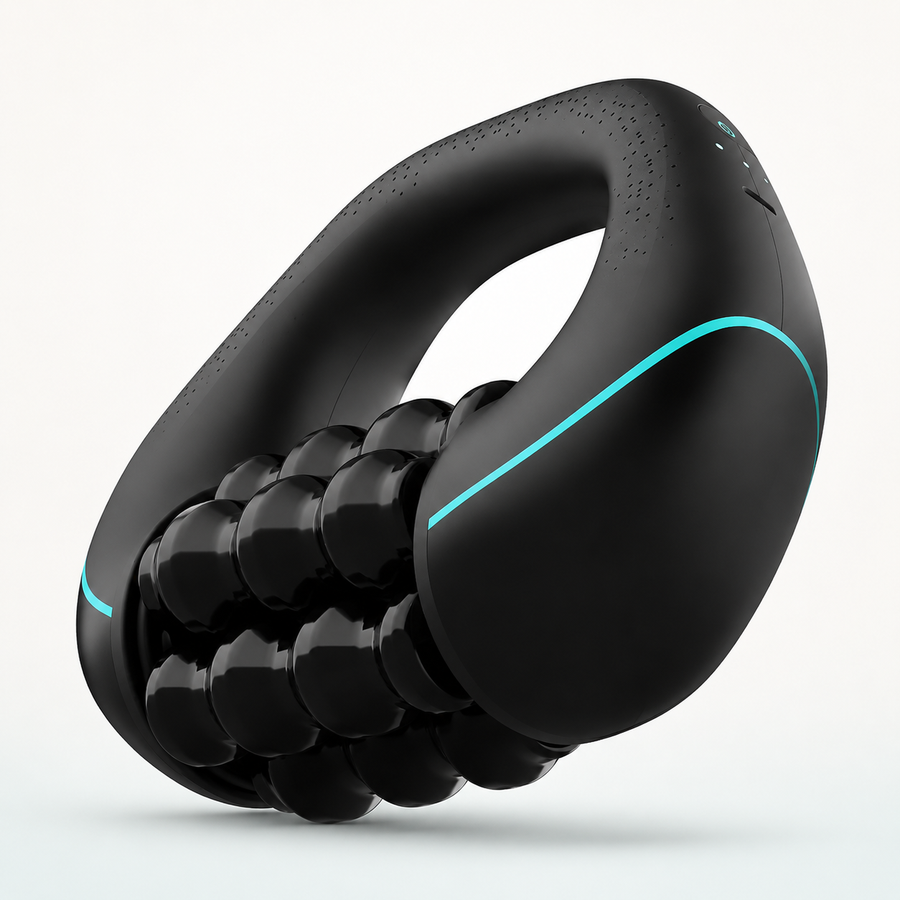
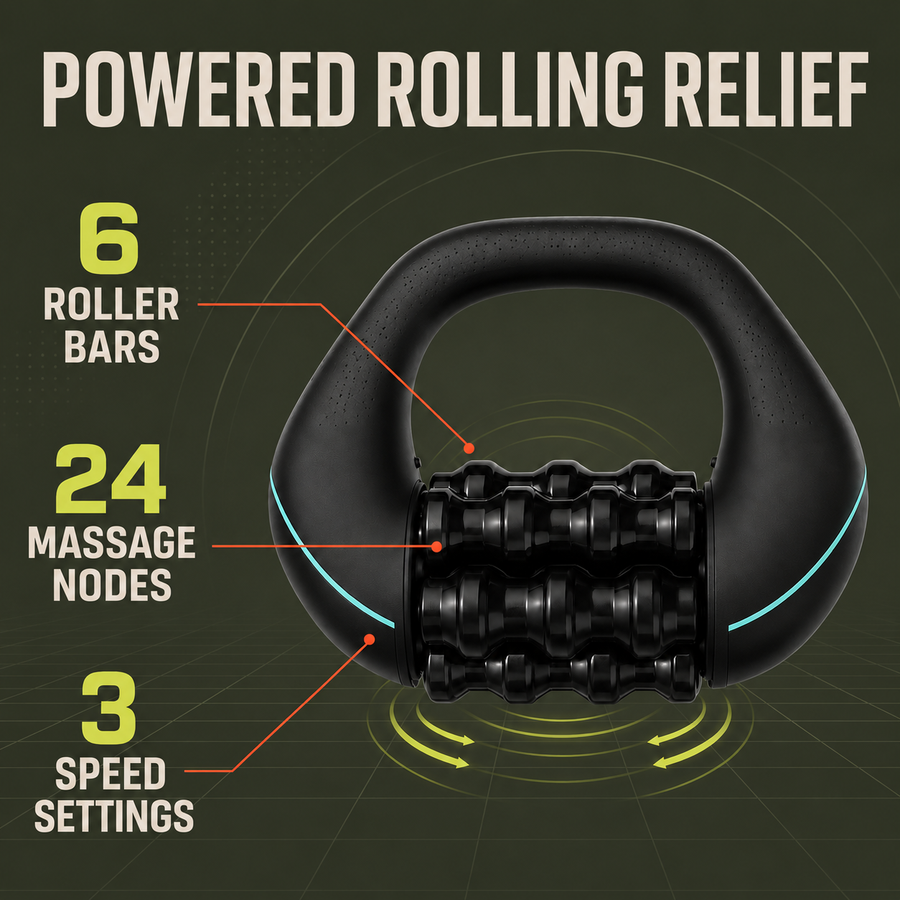
Orbit™ uses six textured rotating wheels and three adjustable speeds for controlled self-massage.
Best muscle massagers in Australia: our top five formats
There is no honest single winner for every body and every budget. The right recovery device depends on the motion you enjoy, the muscle groups you target and whether you will realistically carry and use it. Our selections below represent five distinct use cases rather than five versions of the same massage gun.
1. Orbit™ Mini Recovery Massager
Best for smooth rolling pressure and everyday portability
Orbit™ takes a different approach from a conventional massage gun. Six textured wheels rotate across the muscle to create broad, continuous movement. This makes it our recommended choice for people who want controlled pressure over the quadriceps, hamstrings, calves, glutes, shoulders and other accessible muscular areas without a hammering sensation.
Consider it if: you dislike punchy percussion, want to cover larger areas efficiently or prefer one integrated rolling surface instead of changing attachments.
2. Theragun Mini 3rd Gen
Best for premium compact percussion
Therabody’s compact model uses a traditional percussive format. Its official specifications list three speeds—1,750, 2,100 and 2,400 percussions per minute—and three attachments. It suits buyers who specifically want concentrated tapping pressure and value an established premium device ecosystem.
Consider it if: percussion is your preferred sensation, you want interchangeable heads and you are comfortable paying for a premium branded platform.
3. Hypervolt Go 3
Best for multiple percussion speeds
Hyperice lists five percussion speeds from 1,500 to 2,500 RPM, two head attachments and a travel-ready carry case. It may appeal to users who want more speed increments and targeted percussion but do not need a larger professional-style device.
Consider it if: speed choice and traditional percussion matter more than the smoother sensation of a rolling device.
4. Therabody WaveRoller
Best for vibrating floor-based rolling
The WaveRoller combines the shape of a traditional foam roller with powered vibration. It offers broad coverage and may suit users who already enjoy floor-based foam rolling and want vibration added to that familiar technique.
Consider it if: you are comfortable supporting body weight on a roller and do not need a pocket-sized handheld tool.
5. Traditional manual foam roller
Best battery-free budget option
A basic foam roller remains a useful choice for people who want simple equipment and are comfortable controlling pressure through body position. Density, diameter, length and surface texture vary substantially, so the least expensive roller is not automatically the most comfortable.
Consider it if: budget and battery-free use matter more than handheld convenience.
Muscle massager comparison
| Option | Motion | Best for | Main advantage | Check before buying |
|---|---|---|---|---|
| Orbit™ Mini Recovery Massager | Six-wheel rotating pressure | Smooth full-body self-massage | Broad contact without harsh percussion | Current offer, stock and delivery at checkout |
| Theragun Mini 3rd Gen | Single-head percussion | Premium compact percussion | Three included attachments | Live Australian price and preferred sensation |
| Hypervolt Go 3 | Single-head percussion | More speed settings | Five listed speeds | Regional availability and whether percussion suits you |
| Therabody WaveRoller | Vibrating floor roller | Body-weight rolling | Wide surface for large muscles | Storage, floor space and positioning |
| Manual foam roller | Body-weight rolling | Low-tech routines | No battery or motor | Density, size, texture and comfort |
Comparison uses manufacturers’ publicly listed specifications checked on 25 August 2026. We did not conduct laboratory or hands-on testing of the competing products. Prices are omitted because promotions and regional pricing change.
Why Orbit™ is our recommended rolling massager
It combines six textured rotating wheels, three adjustable speeds and compact handheld control—without relying on traditional hammering percussion.
Rolling pressure or percussion: what is the difference?
A massage gun drives one attachment forwards and backwards in rapid pulses. This produces concentrated percussion. Orbit™ rotates six contact points across the muscle, distributing movement over a broader area. A vibrating foam roller uses your body weight against a large cylindrical surface, while a manual roller relies entirely on your movement.
None of these motions is automatically superior for every user. Someone who enjoys direct pulsing may prefer a massage gun. Someone who finds that sensation harsh may prefer Orbit’s smoother movement. The best muscle massager is therefore the one that matches your tolerance and is easy enough to use consistently.
How to choose the best muscle massager for you
1. Choose the sensation first
Do you want smooth rolling, direct percussion, vibration or firm manual pressure? A long feature list cannot compensate for a motion you dislike.
2. Match the coverage
Quads, hamstrings and calves suit broad contact. A small percussion attachment offers more concentrated pressure but covers less area per pass.
3. Consider real portability
Compare the device, charger, attachments and case together. A tool that stays at home may not help after travel, races or gym sessions.
4. Look for controllable intensity
Several speeds can help you start gently. Hand pressure still matters, and maximum intensity should never be the default.
5. Check seller accountability
Confirm who handles delivery, instructions, returns and support. Marketplace listings can vary by seller even when the product photograph looks similar.
6. Reject exaggerated promises
A consumer massager may support comfort and mobility; it should not promise to diagnose injuries, cure medical conditions or guarantee faster athletic recovery.
Best massager for calves, quads and post-workout recovery
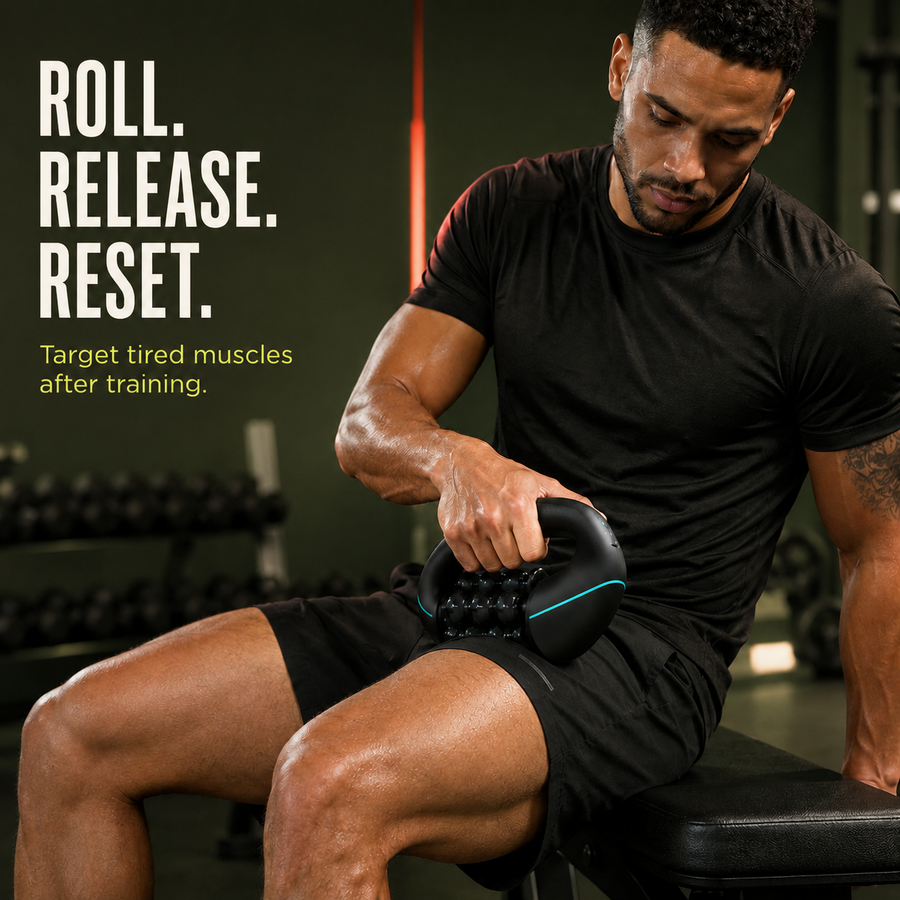
For large muscles such as the quadriceps and hamstrings, broad rolling contact can make a routine quicker and simpler. For calves, use gentle passes over the muscular back of the lower leg while avoiding the shin, Achilles tendon and back of the knee. Glutes and accessible upper-back muscles may also suit rolling pressure when the device can be controlled comfortably.
Begin on the lowest speed, keep the massager moving and let the wheels work. Avoid holding intense pressure over one point. A recovery routine should not feel like another maximum-effort workout.
What does research say about rolling and muscle recovery?
A systematic review and meta-analysis reported that foam rolling can improve range of motion and may be useful for recovery after exercise-induced muscle damage. A separate review of foam rolling and roller massage found potential benefits for joint range of motion and pre- and post-exercise recovery.
These findings support rolling as a reasonable recovery option, but they do not prove that every massager, duration or technique creates the same result. Device research is less complete than product marketing often implies. Sleep, nutrition, appropriate training load and time remain the foundations of recovery.
How to use a muscle massager safely
- Start with the lowest comfortable intensity.
- Use the device over healthy muscular tissue.
- Avoid bones, joints, the spine, the front and sides of the neck, broken skin, bruises and swelling.
- Do not push through sharp, electrical or worsening pain.
- Stop for numbness, tingling, unexpected bruising or loss of function.
- Do not use a consumer massager to self-treat a suspected acute injury.
Best muscle massagers in Australia: FAQs
What is the best muscle massager in Australia?
There is no universal winner. Orbit™ is our recommended option for smooth rolling pressure and portability. Theragun Mini and Hypervolt Go suit people who prefer percussion, while vibrating or manual foam rollers suit floor-based body-weight routines.
What is the best alternative to a massage gun?
A rotating rolling massager is a practical alternative when you want powered movement without repeated hammering percussion. Orbit™ uses six textured rotating wheels across a broader contact area.
Is a rolling massager better than a massage gun?
It depends on sensation and use. Rolling pressure is smooth and broad, while a massage gun is pulsing and concentrated. Neither is automatically better for every person.
Can I use a muscle massager after every workout?
Gentle use may suit some people, but frequency depends on tissue response, training load and health. Do not repeatedly work an irritated or injured area.
Can a massager help delayed onset muscle soreness?
Rolling may help reduce the perception of post-exercise soreness for some people, but results vary. It does not replace adequate sleep, food, hydration and training recovery.
Can I use Orbit™ before training?
Brief, light rolling can be part of a warm-up. Follow it with dynamic movement that prepares you for the specific activity.
Does a muscle massager treat injuries?
No. A consumer recovery massager is not a diagnostic or injury-treatment device. Significant, persistent or worsening pain should be assessed professionally.
Should I buy the massager with the most speeds?
Not necessarily. Speed count matters less than whether the motion, intensity range, shape and controls suit how you will use the device.
Recover smarter. Move better.
Choose smooth, controlled rolling pressure with the Orbit™ Mini Recovery Massager.
Specification sources: manufacturer pages for the Theragun Mini 3rd Gen, Hypervolt Go 3 and Therabody WaveRoller, checked 25 August 2026.
Commercial disclosure: On The Nose Co. publishes this guide and sells the Orbit™ Mini Recovery Massager, so we have a direct commercial interest in purchases made through our links. Therabody, Hyperice and other manufacturers named here did not sponsor, approve or contribute to this article. The comparison is based on publicly available manufacturer information rather than hands-on or laboratory testing. Specifications, stock, prices and promotions can change. Customer-count statements refer to the wider On The Nose Co. range. This article provides general information only and is not medical advice.