

Your post-workout recovery routine
A practical timeline for the first few minutes, the first meal, the evening and the following day—without turning recovery into another full workout.
The exact routine depends on workout duration, intensity, climate, sweat loss, dietary needs and when you train again. No recovery device or supplement can compensate for consistently inadequate food, rest or training-load management.
The foundations
Start with the recovery habits that matter most.
Recovery is the period in which your body responds to training and prepares for what comes next. The basics deserve priority before expensive or complicated extras.
Training load
Match hard sessions with enough lower-load time and avoid repeatedly training through worsening symptoms.
Food and fluids
Replace what the session demanded using meals and hydration suited to your body and schedule.
Sleep
Protect sufficient, regular sleep instead of relying on a recovery gadget to offset sleep loss.
Comfort tools
Use gentle rolling, massage, heat or other optional tools according to comfort and context.
Personalise the emphasis.
Select the session you just completed. The fundamentals remain the same, but the immediate focus changes.
From finish line to next day
An eight-step post-workout recovery timeline.
Treat this as a flexible framework, not a rigid countdown. Your needs after a short walk are different from your needs after a long run, heavy leg session or competition.
MIN
1. Gradually lower the intensity
Walk, pedal or move easily for a few minutes when an abrupt stop feels uncomfortable—especially after hard cardiovascular work. A cooldown can help you transition, but it is not proven to erase soreness or dramatically accelerate every recovery measure.
Keep it genuinely easyMIN
2. Check how you actually feel
Notice dizziness, unusual shortness of breath, sharp pain, swelling, instability or neurological symptoms. These are different from ordinary exertion or expected muscular fatigue and should not be covered up with aggressive massage.
Symptoms guide the next stepMIN
3. Begin replacing fluids
Drink according to thirst and the scale of your losses. Longer sessions, heat and heavy sweating may require a more deliberate plan that includes sodium and food—not only large volumes of plain water.
Hydration should be individualHRS
4. Eat an appropriate recovery meal
Include a useful protein source and enough total energy for your goals. Carbohydrate becomes especially important after long or glycogen-demanding training and when another demanding session is approaching.
The whole day matters—not one magic windowTODAY
5. Use gentle mobility if it feels helpful
Comfortable movement can reduce the feeling of stiffness temporarily. Post-exercise stretching is not a guaranteed treatment for delayed-onset muscle soreness, so avoid forcing painful positions.
Comfortable range onlyTODAY
6. Add optional muscle care
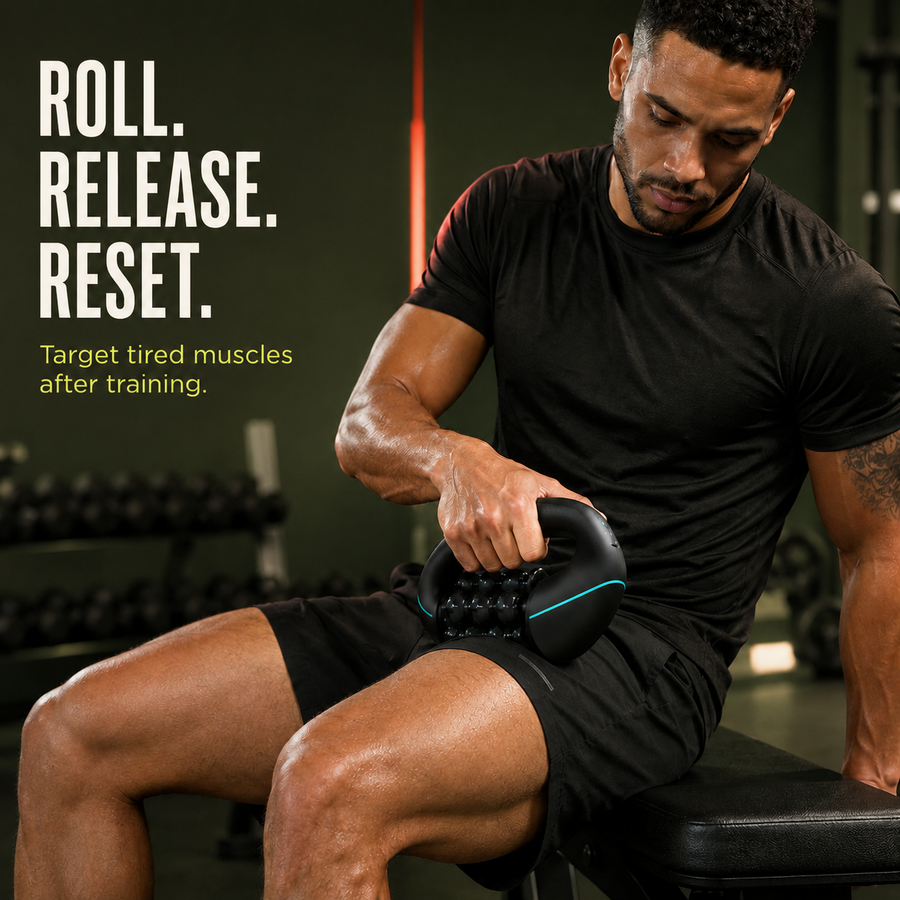
Gentle rolling or massage may support temporary comfort, relaxation or mobility for some people. Start low, keep the device moving over healthy muscle and stop if you experience sharp pain, tingling or numbness.
Optional—not the foundation7. Protect your sleep opportunity
Give yourself enough time to sleep, keep the schedule reasonably consistent and reduce behaviours that disturb your wind-down. Research in athletes supports sleep as a central physical and psychological recovery strategy.
Recovery continues overnightDAY
8. Adjust the next session
Normal soreness can occur after unfamiliar or demanding exercise, often becoming more noticeable later. Reduce load or change the session if movement quality is poor or symptoms are worsening. Persistent or concerning pain deserves assessment.
Do not train by calendar aloneFood and fluid
What should you eat and drink after training?
There is no single recovery meal for every body or workout. Use the session, your dietary requirements and your next training time to set the priority.
| Situation | Useful priority | Practical example |
|---|---|---|
| Strength training | A protein-containing meal and adequate total daily energy | Normal meal containing a high-quality protein source, carbohydrate and vegetables |
| Long endurance training | Carbohydrate, fluid and sodium replacement plus protein | Meal or snack sized to session length, sweat loss and time until the next workout |
| Short moderate workout | Resume normal balanced eating and drink to thirst | Your usual next meal may be sufficient |
| Two sessions close together | Faster replacement of carbohydrate, fluid and protein | Plan food and drink in advance rather than waiting until the second session |
| Heavy sweating or hot conditions | Replace fluid progressively and include sodium through food or an appropriate drink | Individualise using thirst, sweat loss, urine and professional guidance where needed |
Sports-nutrition position stands commonly describe approximately 20–40 grams of high-quality protein per feeding as a useful reference range for many exercising adults, while emphasising total daily intake and distribution across the day. This is not a universal prescription: body size, age, overall diet, training goals and medical needs all matter.
Hydration should also be individual. The American College of Sports Medicine recommends beginning exercise appropriately hydrated and replacing fluid and electrolytes according to factors such as sweat rate, exercise duration and environment. Excessive plain-water intake can also be unsafe, so “drink as much as possible” is poor advice.
See the ISSN nutrient-timing position stand, the joint nutrition and athletic-performance position statement and the ACSM fluid-replacement position stand.
Optional muscle care
Where a mini recovery massager fits.
A recovery tool should complement the fundamentals, not become evidence that you have “earned” another hard session.
Smooth rolling pressure for the optional muscle-care step.
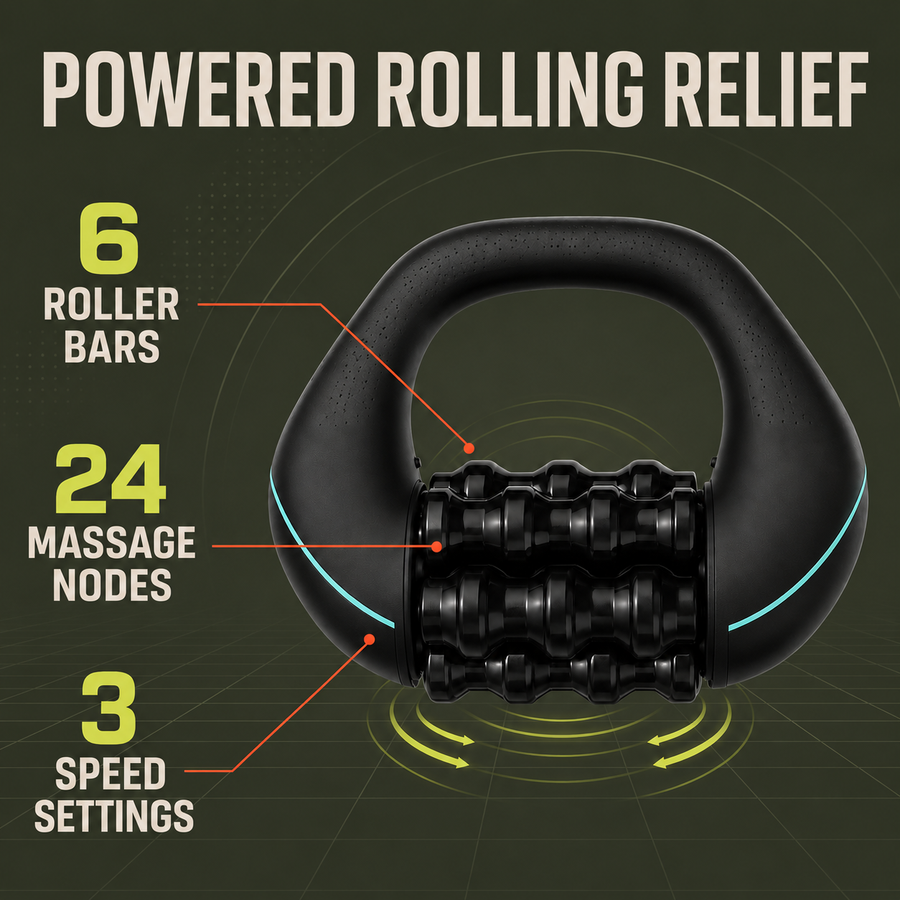
Orbit™ uses six powered textured roller bars rather than the repeated striking motion of a conventional massage gun. Choose one of three speeds and guide it slowly across a healthy muscular area using comfortable hand pressure.
- Six powered roller bars
- 24 textured massage nodes
- Three adjustable speeds
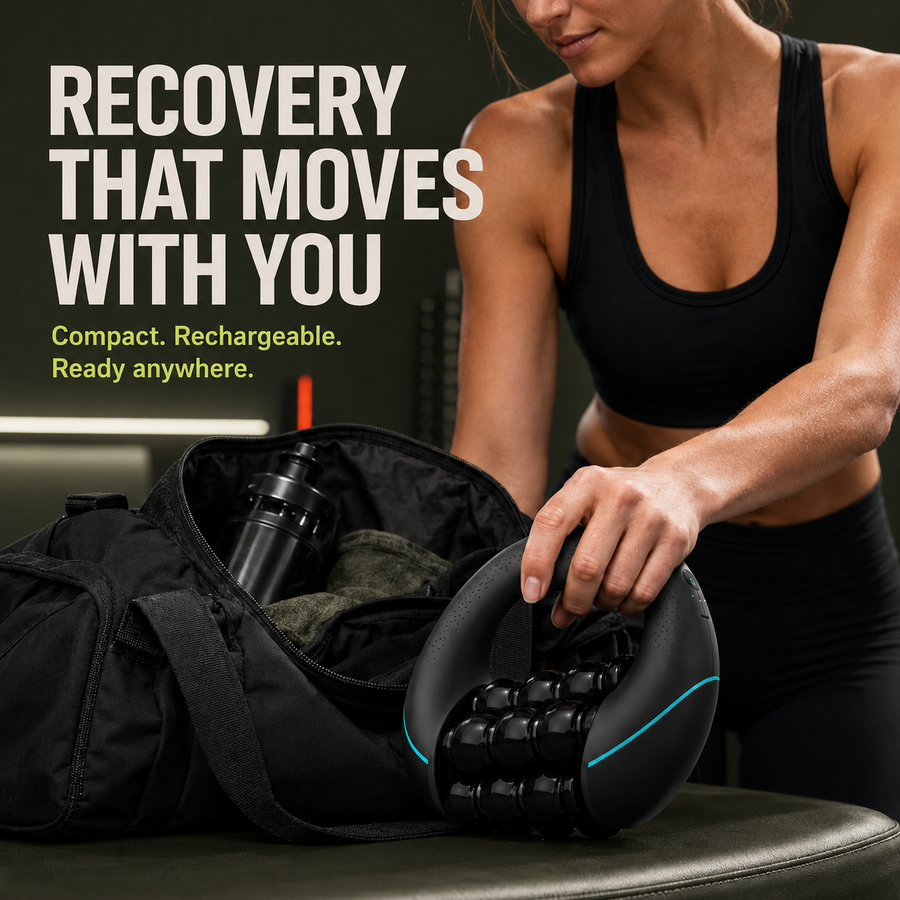
- USB-C rechargeable
- Up to four hours cordless use*
- No attachment changes required
*Battery duration is based on product specifications and can vary with speed, use and charging conditions.
Evidence across massage, vibration, percussion and roller techniques is heterogeneous. Some reviews report reductions in perceived soreness or short-term improvements in mobility, but results depend on the method and study. Research on other devices cannot be treated as direct proof of Orbit™ outcomes.
For a category comparison, read Rolling Massager vs Massage Gun. For a broader product roundup, see Best Muscle Massagers in Australia.
Keep expectations realistic
Four post-workout recovery myths.
“You must stretch to prevent soreness.”
A 2021 systematic review found post-exercise stretching did not meaningfully improve strength recovery, range of motion or delayed-onset muscle soreness compared with passive recovery.
“There is a tiny anabolic window.”
Post-exercise protein can support muscle protein synthesis, but total daily intake, meal distribution and what you ate before training also matter. You do not need to panic if a meal is not immediate.
“More pain means better massage.”
Aggressive pressure is not proof of effectiveness. Sharp pain, numbness, tingling, bruising or worsening symptoms are signals to stop—not targets to push through.
“One recovery hack fixes poor sleep.”
No device, drink or supplement reliably cancels repeated sleep restriction. The Australian Institute of Sport describes sleep as a critical physical and psychological recovery strategy.
Read the post-exercise stretching systematic review, the active cooldown review, the sleep-intervention systematic review and the Australian Institute of Sport recovery hub.
Seek appropriate assessment for severe or increasing pain, major swelling, visible deformity, inability to bear weight, loss of function, persistent weakness, numbness, chest pain, fainting, dark urine after extreme exercise or other concerning symptoms. Do not use massage to hide an injury.
Questions, answered
Post-workout recovery routine FAQs.
What should I do immediately after a workout?
How long should a post-workout recovery routine take?
Do I need protein immediately after training?
Should I stretch after every workout?
Does a cooldown prevent muscle soreness?
When should I use a muscle massager after training?
Is soreness the day after a workout normal?
What is the most important recovery habit?
Continue learning
Related recovery guides.
Optional rolling recovery
Add smooth muscle care to your routine.
Explore Orbit™ and view the current product-page offer available in your market.
Commercial disclosure: On The Nose Co. publishes this guide and sells the Orbit™ Mini Recovery Massager, so we have a direct commercial interest in purchases made through our links. Orbit™ is presented as an optional comfort tool rather than a replacement for recovery fundamentals or professional care. Research on massage, vibration, foam rolling or percussion devices does not directly establish Orbit™ outcomes. Product specifications and offers can change. This article provides general information only and is not medical or personalised sports-nutrition advice.