

Best Nose Strips for Sleep: Top Options Compared
We compare conventional adhesive strips, stronger sleep strips, magnetic nasal systems and internal dilators to help you choose the right nighttime breathing support for your nose, skin and sleep routine.
What are the best nose strips for sleeping?
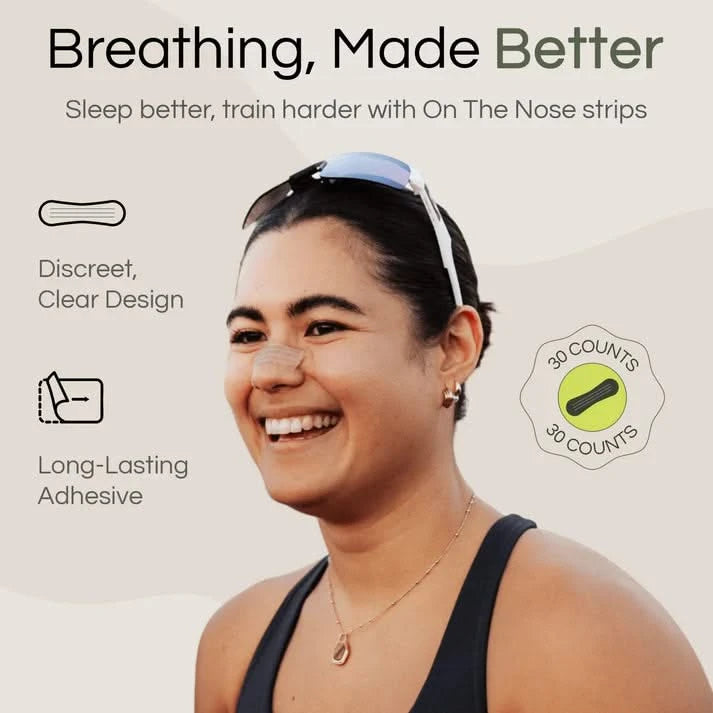
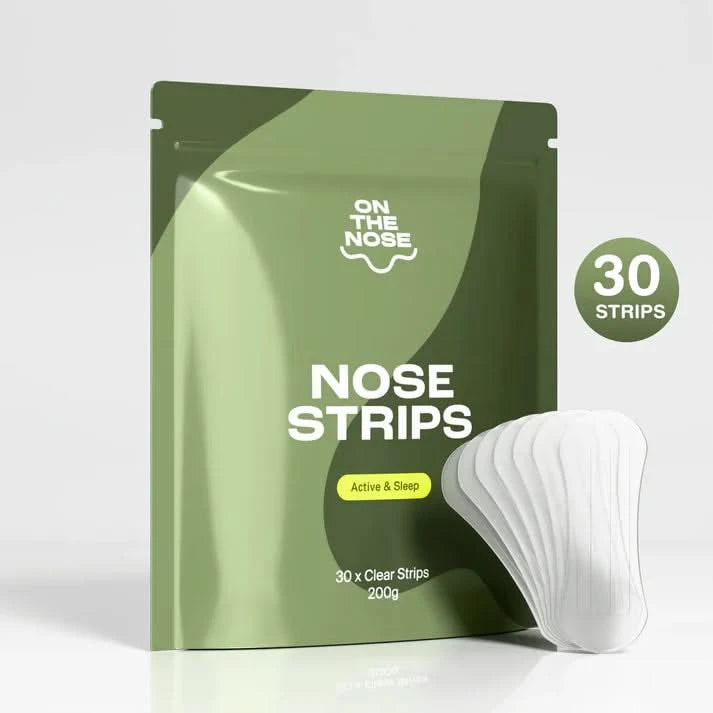
On The Nose Co. Nose Strips for Snoring are our best overall sleep option because they are made for secure overnight wear, are available in clear and black formats and provide external nasal support without placing a device inside the nostrils. Breathe Right is a widely available alternative, Intake offers a reusable external band, and AIRMAX suits sleepers who prefer an internal nasal dilator.
Best sleep nose strips by category
Different sleepers need different levels of support. We compared standard external strips, stronger adhesive options, magnetic systems and internal nasal dilators rather than assuming one format suits everyone.
On The Nose Co.
Dedicated overnight design with clear and black options, secure adhesion and comfortable external lift.
Breathe Right
Established international brand with several strengths, colours and broad retail availability.
Intake Breathing
Reusable external band that connects to smaller adhesive tabs on each side of the nose.
AIRMAX
Reusable internal dilator for sleepers who want nasal support without adhesive across the face.
Sleep nose strips and nasal dilators compared
| Product | Format | Best suited to | Adhesive area | Reusable? | Assessment |
|---|---|---|---|---|---|
|
On The Nose Co. Nose Strips for Snoring View product |
External adhesive strip | Everyday sleep, nasal restriction and nasal-based snoring | Full-width external strip | No | |
|
Breathe Right Original or Extra Strength Official website |
External adhesive strip | Nighttime congestion and easy local availability | Full-width external strip | No | |
|
On The Nose Co. Magnetic Nasal Strips View product |
Reusable magnetic bridge with side tabs | Stronger external support with smaller adhesive areas | Two side tabs | Bridge reusable | |
|
Intake Breathing Official website |
Reusable external band with side tabs | People wanting noticeable outward nasal support | Two side tabs | Band reusable | |
|
AIRMAX Nasal Dilator Official website |
Internal nasal dilator | People avoiding facial adhesive | None | Yes |
These scores are an editorial assessment of sleep suitability, comfort, format, availability and ease of use. They are not clinical sleep scores and do not indicate that a product can treat sleep apnoea or guarantee improved sleep quality.
Detailed reviews of the best nose strips for sleep
The products below support the nasal entrance in different ways. Your best choice depends on skin sensitivity, nose shape, preferred lifting strength and whether you are comfortable wearing an internal device.
On The Nose Co. Nose Strips for Snoring
On The Nose Co. Nose Strips for Snoring are our best overall choice for sleepers who want simple external nasal support without inserting anything into the nose.
Each strip uses flexible lifting bands to support the outer nasal walls and nasal-valve area while worn. The overnight adhesive is designed to remain secure through normal movement, humidity and night sweats when applied to clean, dry skin.
Clear strips provide a discreet option and may suit more sensitive skin, while black woven strips suit sleepers who prefer a stronger or more visible design. Multiple buying options make them suitable for first-time trials and regular nightly routines.
- Designed specifically for sleep and snoring.
- Simple one-piece external format.
- Clear and black choices.
- Secure overnight adhesion.
- 30-day money-back guarantee.
- Available to several international markets.
- Each strip is single-use.
- Skin must be clean and dry.
- Results depend on the cause of the restriction.
- Adhesive tolerance varies between people.
Breathe Right Nasal Strips
Breathe Right is one of the world's most recognised nasal-strip brands. Its flexible spring-like bands lift the sides of the nose to provide temporary relief from nasal congestion while the strip remains in place.
Original, Clear and Extra Strength options are available in some countries. It is a practical choice for people who prioritise pharmacy or supermarket availability rather than purchasing from a specialist breathing brand.
- Well-established international product.
- Broad retail availability.
- Several styles and strengths.
- Simple external application.
- Single-use format.
- Availability differs between countries.
- Some packaging contains natural rubber latex.
- Not every range suits sensitive skin.
On The Nose Co. Magnetic Nasal Strips
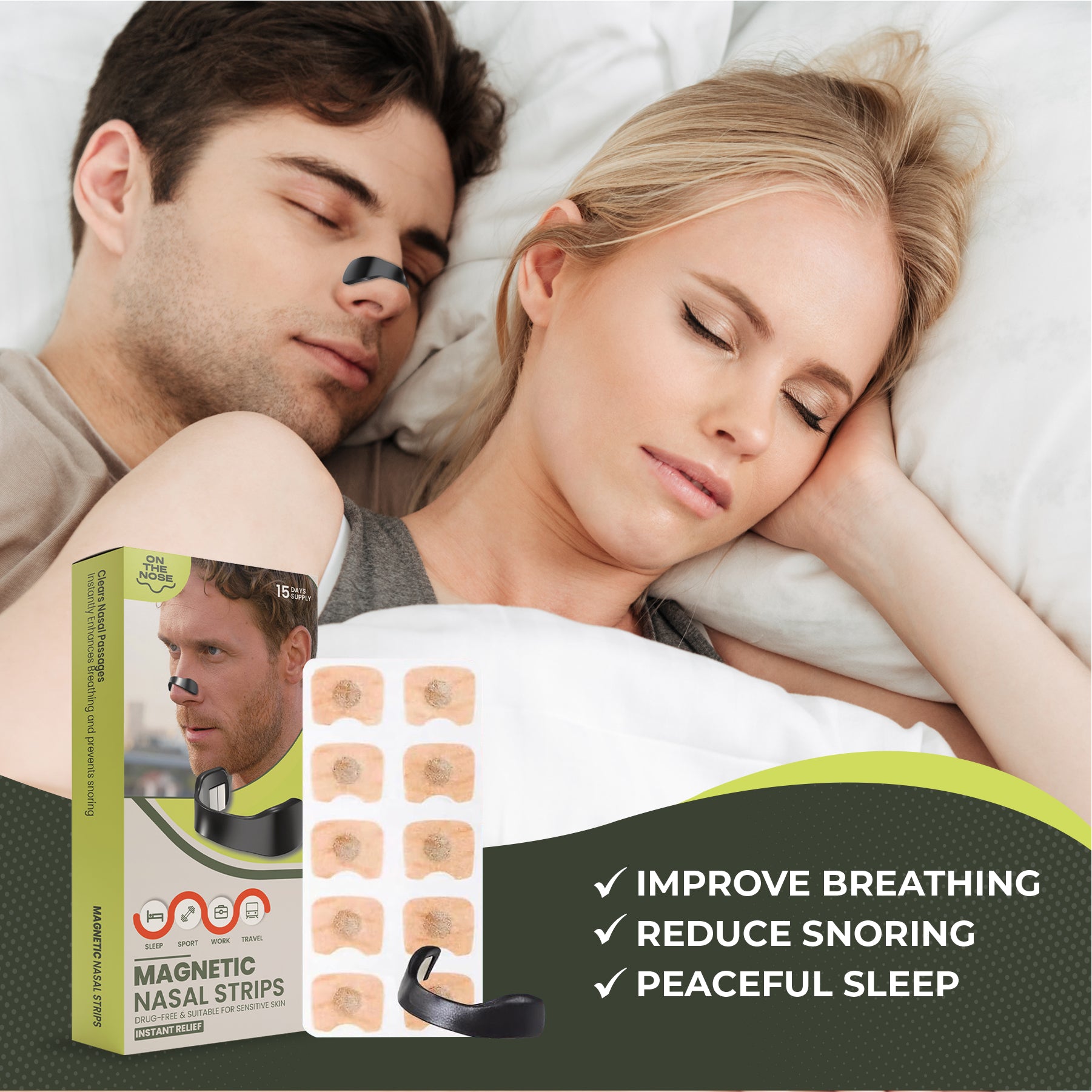
This system places two adhesive tabs beside the nostrils and connects them using a reusable magnetic bridge. The bridge gently pulls outward to support the nasal entrance.
It may suit sleepers who want stronger or more adjustable external support without wearing a single full-width adhesive strip across the bridge of the nose.
- Reusable magnetic bridge.
- Smaller adhesive contact areas.
- Noticeable external lift.
- Refill tabs available separately.
- Requires careful two-tab alignment.
- Fresh adhesive tabs are still needed.
- More setup than a conventional strip.
- Bridge may feel more prominent.
Intake Breathing Starter Kit
Intake uses two adhesive tabs and a reusable external band. It temporarily supports the nasal valve while worn and is marketed for both sleep and exercise.
It may suit people who want stronger outward support than a conventional strip and do not mind the ongoing cost of replacement tabs.
- Reusable external band.
- Medical-grade adhesive tabs.
- Latex-free and hypoallergenic tabs.
- Strong outward support.
- Higher initial cost.
- Replacement tabs create ongoing cost.
- More components than a standard strip.
- Band can be visually noticeable.
AIRMAX Internal Nasal Dilator
AIRMAX sits inside the nostrils and uses flexible wings to widen the nasal entrance. It may appeal to people who cannot tolerate facial adhesive or who prefer a reusable device.
Internal devices create a different sensation from an external strip. Some sleepers find them secure and convenient, while others dislike having a device inside the nose.
- No adhesive on the skin.
- Reusable and washable.
- Different sizes available.
- Not affected by facial oils or night sweats.
- Internal sensation may disturb some sleepers.
- Must be washed regularly.
- Correct sizing is important.
- May cause dryness or irritation in some users.
Why On The Nose Co. ranks first
On The Nose Co. offers a dedicated sleep and snoring product rather than treating sleep as a secondary use. The strips are designed for secure overnight wear, come in clear and black options and provide external support without an internal device.
The brand also supports the product with breathing education, snoring guides, interactive tools and a Knowledge Centre, helping customers understand when nose strips may help and when snoring requires medical assessment.
Shop Nose Strips for SleepDo nose strips actually improve sleep?
Nose strips are external nasal dilators. They use flexible bands to support tissue around the nostrils and nasal valve, which is one of the narrowest parts of the nasal airway.
Supporting this area may reduce nasal resistance and make breathing through the nose feel easier. This can be particularly relevant when a sleeper experiences congestion, nasal-valve narrowing or nostrils that move inward during inhalation.
What the evidence supports
Research into nasal dilators and sleep has produced mixed results. People whose sleep disruption is closely related to nasal obstruction may notice more benefit than people whose breathing difficulty originates deeper in the throat.
A realistic expectation: a nose strip may make the front of your nose feel more open and support comfortable nasal breathing. It should not be viewed as a guaranteed cure for poor sleep, mouth breathing, snoring or obstructive sleep apnoea.
Read the complete evidence guide: Do Nose Strips Actually Work?
You can also learn more in How Do Nose Strips Work? The Science Explained .
How to choose the best nose strip for sleep
Overnight adhesion
Choose a strip designed to remain secure through movement, warmth, humidity and normal night sweats.
Comfortable lift
The support should feel noticeable without creating excessive tension, pressure or pulling on the skin.
Correct sizing
A strip must span the intended nasal-valve area without sitting too high, too low or extending excessively beyond the nose.
Skin compatibility
People with sensitive skin should choose suitable materials, patch-test when appropriate and remove strips slowly.
External or internal
External strips avoid placing anything inside the nostrils. Internal devices avoid facial adhesive but may feel intrusive.
Cause of restriction
Nose strips are most relevant when narrowing near the nasal entrance contributes to the breathing difficulty.
Best option for sensitive skin
Consider a clear, hypoallergenic strip and avoid applying it over irritated, broken, sunburnt or recently treated skin. Remove it slowly using warm water rather than pulling it off quickly.
Best option for stronger external support
A stronger woven strip or a magnetic-style system may provide a more noticeable lifting sensation. Additional strength is not automatically better if it causes discomfort or skin irritation.
Best option without adhesive
An internal dilator such as AIRMAX may suit people whose skincare, natural oils or adhesive sensitivity makes external strips difficult to use.
Who may benefit most from nose strips at night?
Nose strips may be worth trying when you regularly notice restriction near the front of the nose, particularly after lying down.
- People with mild nighttime nasal congestion.
- People whose nostrils narrow during inhalation.
- People who feel more blocked after lying down.
- People with nasal-based snoring.
- People seeking drug-free external support.
- People who dislike internal nasal devices.
- Travellers sleeping in dry or unfamiliar environments.
Learn about common causes of nighttime restriction in Why Is My Nose Blocked When I Lie Down?
Alternating restriction may also relate to the normal nasal cycle. Read Why Can I Only Breathe Through One Nostril?
How to make a nose strip stay on all night
Clean the application area
Wash away makeup, facial oil, moisturiser, sunscreen and skincare products from the nose.
Dry your skin completely
Moisture is one of the most common reasons a strip lifts or falls off overnight.
Position the strip correctly
Place it across the lower bridge, just above where the nostrils begin to flare rather than high on the bony bridge.
Press from the centre outward
Smooth both sides firmly and hold them against the skin for several seconds to help activate the adhesive.
Avoid repositioning it repeatedly
Lifting and replacing the same strip can reduce adhesion. Use a fresh strip if placement needs to be completely restarted.
Remove it gently in the morning
Loosen the edges slowly. Warm water can help reduce pulling on dry or sensitive skin.
Nose strips versus mouth tape for sleep
Nose strips and mouth tape perform different jobs. Nose strips support the nasal entrance. Mouth tape is intended to discourage the lips from falling open.
Improving nasal airflow should come before considering mouth tape. Mouth tape should never be used when the nose is blocked, breathing is difficult, nausea or vomiting is possible, or a healthcare professional has advised against it.
Learn more in our Nose Strips vs Mouth Tape guide or explore the Nose Strips and Mouth Tape Bundle .
Can nose strips reduce snoring?
Nose strips may reduce snoring when restricted nasal airflow contributes to the sound. By supporting the front of the nose, they may allow air to move through the nasal passages with less resistance.
They are less likely to resolve snoring caused mainly by vibration of throat tissue, tongue position, alcohol, certain medications, obesity or obstructive sleep apnoea.
Read Best Nose Strips for Snoring or explore The Complete Guide to Snoring .
Do nose strips treat sleep apnoea?
No. Nose strips and nasal dilators should not be used as substitutes for medically prescribed sleep-apnoea treatment.
Seek medical advice if you experience:
- Breathing pauses witnessed during sleep.
- Choking, gasping or repeated snorting.
- Loud and persistent snoring.
- Morning headaches.
- Severe dry mouth on waking.
- Significant daytime tiredness.
- Difficulty concentrating or staying awake.
- High blood pressure alongside regular snoring.
A quieter night does not confirm that sleep apnoea is absent. Only an appropriate professional assessment can diagnose a sleep disorder.
You can use the educational On The Nose Co. Snoring Risk Calculator to identify symptoms that may warrant a professional conversation. It does not provide a diagnosis.
Final verdict: which sleep nose strip should you choose?
On The Nose Co. Nose Strips for Snoring are our best overall choice for sleepers who want secure, comfortable external support in a straightforward single-piece format.
Breathe Right is a practical alternative when pharmacy availability is the priority. On The Nose Co. Magnetic Nasal Strips and Intake Breathing may suit people wanting stronger reusable external systems, while AIRMAX is worth considering when facial adhesive is unsuitable.
The best sleep strip is ultimately the one that fits correctly, remains comfortable throughout the night and addresses restriction near the nasal entrance. It should support your breathing routine without making unrealistic promises about curing snoring, poor sleep or sleep apnoea.
Frequently asked questions
What are the best nose strips for sleep?
On The Nose Co. Nose Strips for Snoring are our best overall sleep option because they are designed for secure overnight wear and are available in clear and black formats. The right choice still depends on fit, skin and preferred lifting strength.
Do nose strips actually help you sleep better?
They may make nasal breathing feel easier when nasal restriction is present. Improved nasal openness does not guarantee better sleep quality for every person.
Can nose strips stop snoring?
They may reduce nasal-based snoring but cannot address every cause of snoring, including vibration or narrowing deeper in the throat.
Can I wear nose strips every night?
Many people use them regularly when their skin tolerates the adhesive. Follow the product directions and stop using them if persistent irritation develops.
How long can I wear a sleep nose strip?
Follow the directions for your chosen product. On The Nose Co. sleep strips are designed for up to 12 hours of wear.
Why does my nose strip fall off at night?
Facial oil, moisturiser, moisture, incorrect positioning or repeated repositioning can weaken adhesion. Apply a fresh strip to clean, completely dry skin.
Are clear or black nose strips better for sleep?
Colour alone does not determine effectiveness. Clear strips provide a discreet appearance, while woven black strips may offer a different feel or strength depending on the product.
Are stronger nose strips better?
Not always. A stronger strip may provide additional external lift, but correct fit, comfort and the cause of your restriction are just as important.
Can nose strips help a blocked nose when lying down?
They may support airflow near the nasal entrance, but they cannot treat every cause of nighttime blockage, including infection, allergy inflammation or structural obstruction.
Can nose strips help with mouth breathing?
Easier nasal airflow may reduce the urge to breathe through the mouth for some people. A strip cannot guarantee that the mouth will remain closed during sleep.
Are magnetic nose strips reusable?
The magnetic bridge is reusable, but the adhesive side tabs normally need to be replaced for each use.
Are internal nasal dilators better than strips?
Neither format is best for everyone. Internal dilators avoid facial adhesive, while external strips avoid placing a device inside the nostrils.
Can nose strips fix a deviated septum?
No. They may temporarily support the outer nasal walls but cannot straighten the septum or permanently correct a structural problem.
Can nose strips treat sleep apnoea?
No. Nose strips do not treat obstructive sleep apnoea. Breathing pauses, gasping and significant daytime sleepiness require medical assessment.
Can I use nose strips with CPAP?
Some people may use an external strip with CPAP, but compatibility depends on the mask and treatment plan. Check with your sleep clinician or equipment provider.
Research and product sources
- Camacho M, et al. Nasal dilators for snoring and obstructive sleep apnoea: a systematic review and meta-analysis. View the research .
- Dinardi RR, et al. External nasal dilators: definition, background and current uses. View the published review .
- Breathe Right. How Breathe Right nasal strips work and current product information. View official information .
- Intake Breathing. External magnetic nasal-dilator product information. View official information .
- AIRMAX. Internal nasal-dilator product and usage information. View official information .