

How to recover after leg day
Seven practical steps for sore quads, glutes, hamstrings and calves—without confusing normal training soreness with an injury.
First, understand the feeling
Why leg day hurts one or two days later
Delayed-onset muscle soreness—DOMS—is the dull ache and stiffness that can follow unfamiliar or demanding exercise. It often develops after the session rather than during it.
Exercises with a strong eccentric component, where muscles produce force while lengthening, can be especially unfamiliar: think lowering into a squat, controlling a lunge or descending stairs. Soreness is not required for progress, and more soreness does not automatically mean a better workout. Your recovery plan should restore normal function while preserving the training adaptation.
Move
Use comfortable activity to reduce the “rusty” feeling without adding a hard session.
Refuel
Provide energy, carbohydrate and protein instead of chasing a single recovery food.
Sleep
Protect the recovery behaviour that supports both physical and psychological readiness.
Reload
Return to hard lower-body work when normal movement and performance are back.
Interactive check-in
What does your leg-day soreness feel like?
Choose the closest description. This provides general guidance, not a diagnosis.
Pick the closest match
If more than one applies, follow the more cautious recommendation.
The complete routine
Seven steps for leg day recovery
The basics matter more than a complicated stack of gadgets, supplements and extreme recovery methods.
01
Finish with easy movement
Walk or cycle gently for a few minutes while breathing settles. This is a downshift, not a second workout. Stop if you have sharp pain or an altered gait.
02
Eat a complete recovery meal
Include a protein source, carbohydrate and foods that support your usual overall nutrition. Protein ingestion and resistance exercise both stimulate muscle protein synthesis, but total daily intake and consistency matter more than a mythical 30-minute window (ISSN position stand).
03
Replace fluids appropriately
Drink according to thirst, training conditions and your known sweat losses. Very hot, long or sweaty sessions may need a more deliberate plan; not every leg workout requires an electrolyte product.
04
Use mobility for comfort
Try slow bodyweight movement through a comfortable range. Stretch if it feels good, but do not force it: a systematic review found no meaningful advantage of post-exercise stretching over passive recovery for DOMS or strength recovery (Afonso et al., 2021).
05
Add gentle rolling only if it helps
Use broad, slow passes over relaxed muscle—not joints, bones, tendons, bruises or swollen tissue. Rolling is optional and should never become a pain-tolerance challenge.
06
Protect your sleep
Keep a consistent sleep opportunity and a wind-down routine. The Australian Institute of Sport describes sleep as a critical physical and psychological recovery strategy (AIS REST Hub).
07
Adjust the next training load
Upper-body training may fit while legs recover. Before another hard leg session, look for normal walking, stairs and bodyweight movement. Technique matters more than following the calendar.
Match the stress
Recovery by leg-day workout
The session that created the soreness gives you clues about where to reduce load next time.
Quads + glutes
Deep squats, split squats and lunges may make sitting down and stairs feel demanding.
Next step:Use easy walking and comfortable knee/hip movement. Reduce load or volume if depth and control are not normal.
Hamstrings + glutes
Romanian deadlifts and good mornings can create soreness through the posterior chain.
Next step:Avoid aggressive hamstring stretching. Reload when bending and hinging no longer changes your technique.
Calves + lower leg
Calf raises, sled work and jumps may be noticeable when walking or using stairs.
Next step:Keep the Achilles tendon out of direct rolling and use our calf recovery guide for warning signs.
Optional muscle care
How to use Orbit™ after leg day
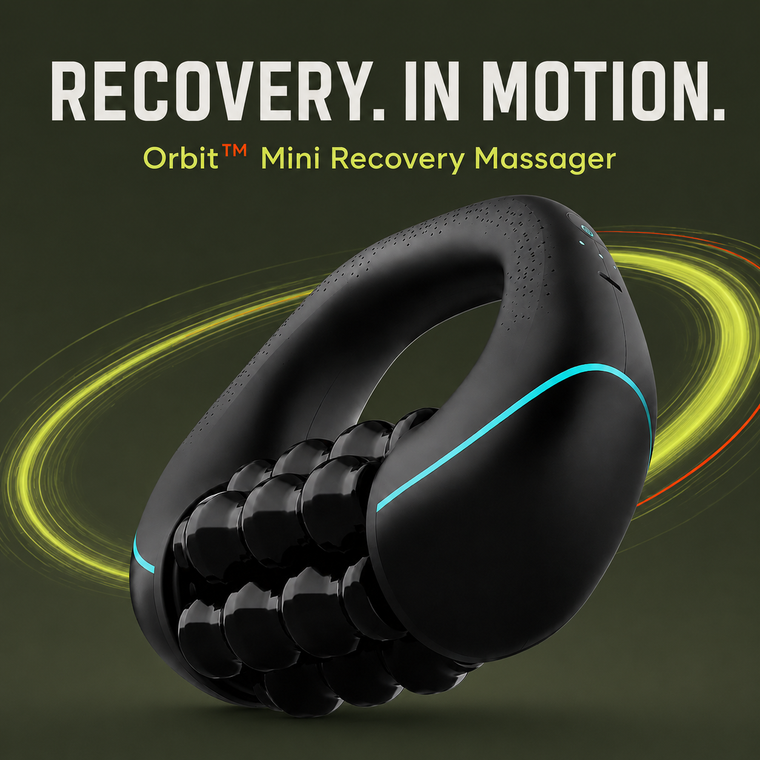
Orbit™ can provide controlled rolling across broad, healthy muscle areas. It cannot diagnose an injury or make muscle tissue recover on command.
The 5-minute comfort circuit
Start low. Stay on muscle. Reassess.
- QuadsBroad passes along the front of the thigh.
- Outer quadWork the muscle, not the side of the knee or hip bone.
- HamstringsUse supported, relaxed muscle and light pressure.
- CalvesStay on the muscle belly; avoid Achilles and back of knee.
A 2024 systematic review found self-myofascial release may temporarily improve flexibility, range of motion and perceived recovery in athletes, but protocols varied. This evidence does not prove faster tissue healing and did not test Orbit™ specifically. Use rolling as an optional comfort practice, not a substitute for sleep, food, load management or clinical care. Source: Konrad et al., 2024.
Popular recovery ideas
What helps—and what is overpromised
Easy active recovery
Comfortable movement can temporarily reduce the sensation of DOMS. Keep it easy enough that it does not become more training stress.
Enough food and protein
Recovery depends on your wider diet, energy availability and daily protein—not one magic shake immediately after lifting.
Stretching soreness away
Stretch for mobility or preference, but evidence does not support it as a meaningful DOMS cure.
Ice baths after every lift
Cold water may alter soreness, but repeated use immediately after resistance training may attenuate some strength adaptations. Use and timing should match your priority (Grgic et al., 2023).
Do not ignore this
When leg-day soreness needs medical care
DOMS is usually diffuse and linked to the trained muscles. Severe or unusual symptoms are not something to “roll out.”
Severe muscle pain or swelling with marked weakness and dark red, brown, tea- or cola-coloured urine can be signs of rhabdomyolysis, which may occur after intense exercise. Healthdirect Australia advises urgent assessment because symptoms can begin hours or days later. See Healthdirect’s rhabdomyolysis guidance.
Stop training and seek professional advice for a sudden pop, sharp localised pain, joint pain, significant bruising or swelling, inability to bear weight, numbness, obvious weakness, pain that keeps worsening, or symptoms that fail to improve as expected.
Straight answers
Leg day recovery FAQs
How long does leg day soreness last?
Why is the second day after leg day often worse?
Should I train legs when they are still sore?
Does walking help after leg day?
Should I stretch after leg day?
How much protein do I need after leg day?
Can a rolling massager reduce leg-day soreness?
Where should I avoid using a massager on my legs?
Is extreme soreness a sign of a good leg workout?
The complete Orbit™ series
Keep building your recovery knowledge
A compact addition to recovery
Meet Orbit™
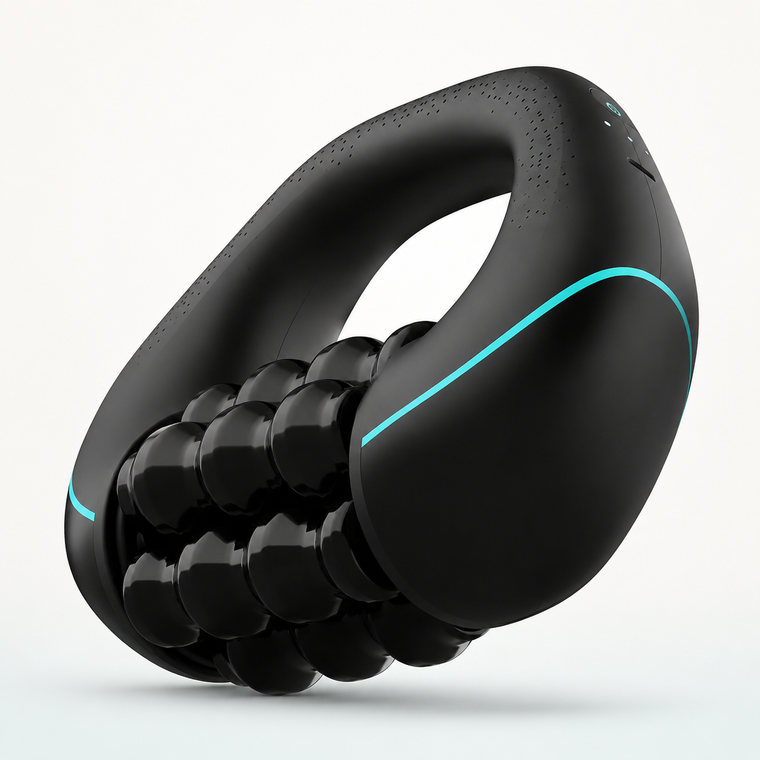
Six powered textured roller bars, 24 massage nodes, three speeds and cordless USB-C charging for broad muscle areas. Battery life is up to four hours depending on speed, pressure and use. Charging cable included.