

Do Nose Strips Increase Oxygen? What the Science Says
Nose strips can make the nasal passages feel more open, but does that mean more oxygen reaches your blood, muscles or brain? This evidence-led guide separates improved nasal airflow from oxygen saturation, VO₂ max and athletic performance.

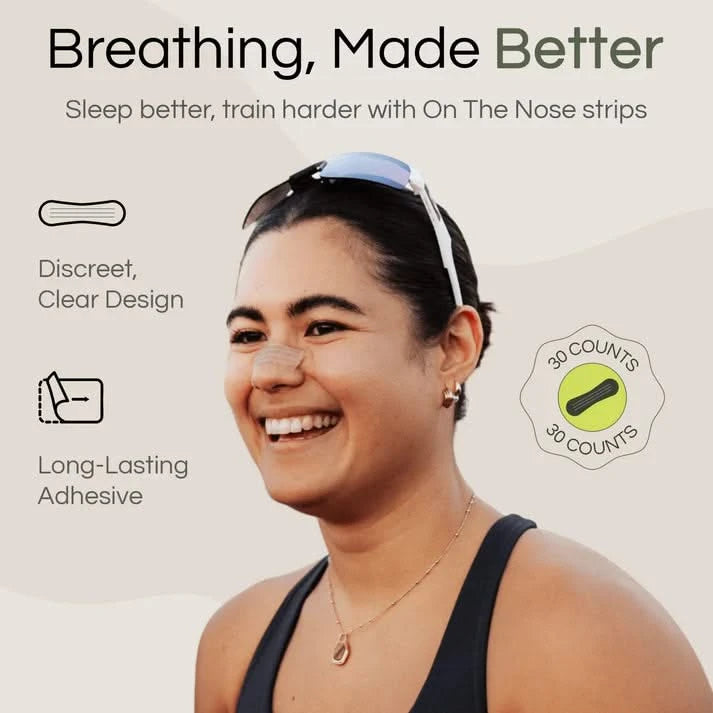
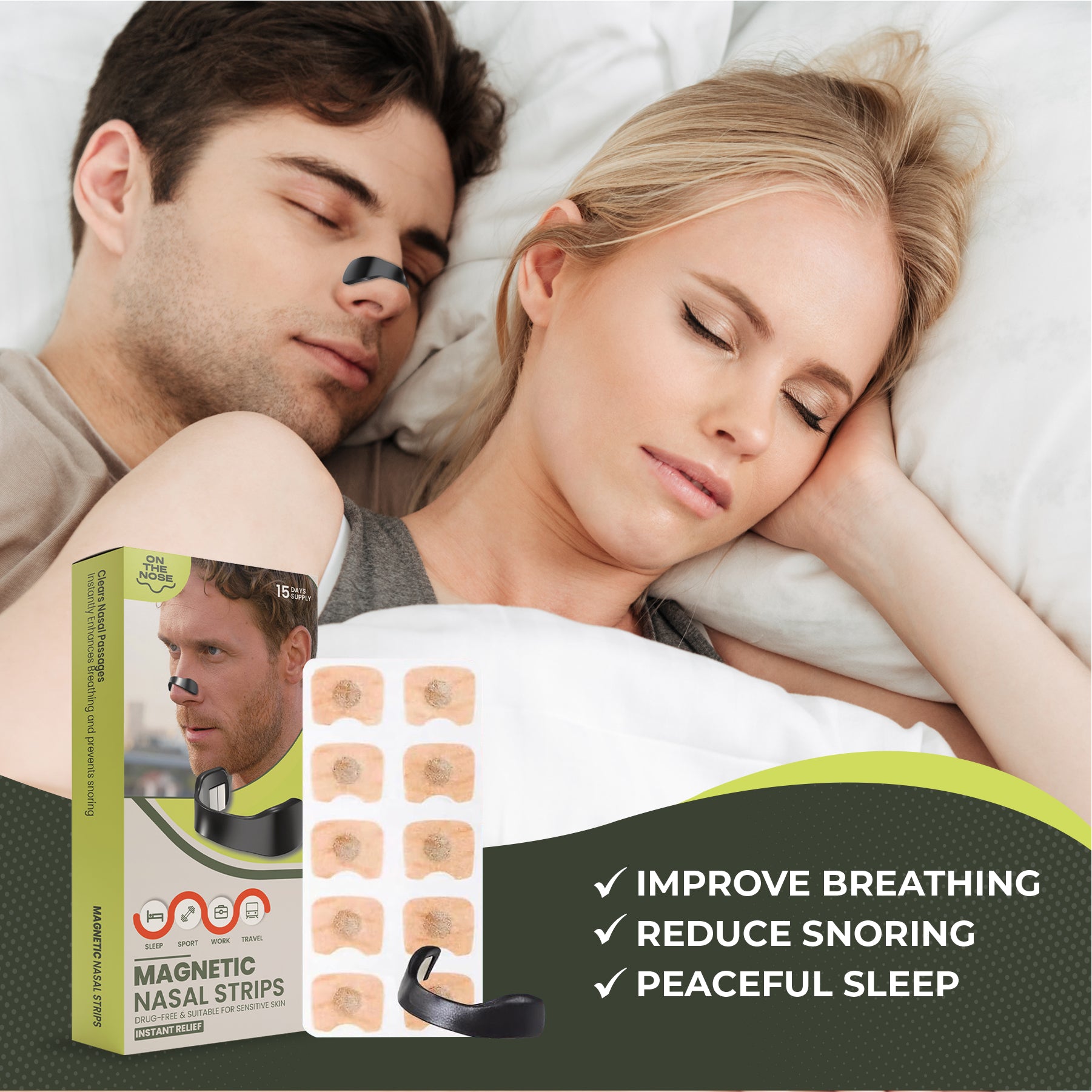
Do nose strips increase oxygen levels?
Nose strips can widen the nasal-valve area and reduce resistance to air moving through the nose, which may make nasal breathing feel easier. However, research has not shown that they consistently increase blood oxygen saturation, VO₂ max or oxygen uptake in healthy people. Their main benefit is improved nasal openness and breathing comfort—not creating additional oxygen or forcing more oxygen into the bloodstream.
The most important points
Nose strips can improve nasal airflow
They externally support the nasal valve and outer nasal walls, helping reduce resistance near the front of the nose.
Better airflow is not more oxygen
A nose that feels more open does not automatically mean blood oxygen saturation or VO₂ max has increased.
Comfort may still be valuable
Easier-feeling nasal breathing can support comfort during sleep, running, gym training and daily activities.
Nasal airflow, oxygen saturation and VO₂ max are different
The word “oxygen” is often used loosely in product advertising, fitness discussions and social media. In reality, several different measurements are involved.
A nose strip acts mechanically on the outside of the nose. It may help more air move through the nasal entrance with less resistance, but it does not directly change the lungs, red blood cells, heart or muscles responsible for transporting and using oxygen.
The key distinction: nose strips can improve the route air takes through the nose, but they do not create additional oxygen or guarantee that more oxygen enters the bloodstream.
How do nose strips improve airflow?
Adhesive nose strips are external nasal dilators. Flexible bands inside the strip attempt to return to their original shape after being applied across the nose.
This creates gentle outward tension on the flexible tissue around the nostrils and nasal valve. The nasal valve is one of the narrowest parts of the upper airway and can contribute significantly to nasal resistance.
Supporting this area may:
- Increase the cross-sectional area near the nasal entrance.
- Reduce inward movement of the nasal sidewalls.
- Reduce resistance to air moving through the nose.
- Make inhalation through the nose feel less restricted.
- Support nasal breathing during sleep or manageable exercise.
These changes can be noticeable even when blood oxygen measurements remain unchanged.
Learn more in How Do Nose Strips Work? The Science Explained .
What does the research say about nose strips and oxygen?
Research generally supports the ability of external nasal dilators to improve nasal-valve dimensions or reduce nasal resistance. Evidence is much less supportive of claims that nose strips increase systemic oxygen levels or aerobic performance.
| Outcome | What studies suggest | Practical interpretation |
|---|---|---|
| Nasal-valve opening | External dilators can increase space around the nasal valve. | May improve nasal openness |
| Nasal resistance | Some studies report reduced resistance to nasal airflow. | May make breathing feel easier |
| Blood oxygen saturation | Studies have not consistently found meaningful increases in SpO₂ among healthy participants. | No reliable increase demonstrated |
| VO₂ max | Systematic reviews have not found consistent improvement during exercise in healthy people. | Not a proven VO₂-max enhancer |
| Heart rate | No consistent improvement has been demonstrated. | Usually unchanged |
| Breathing comfort | Some users report reduced perceived restriction. | Individual benefit is possible |
Systematic review of exercise studies
A systematic review examining external nasal dilator strips during exercise found no improvement in VO₂ max, heart rate or ratings of perceived exertion among healthy participants.
Internal nasal dilator research
Research examining an internal nasal dilator found improved nasal patency but no statistically significant difference in blood oxygen saturation, heart rate or mean VO₂ max.
Why can breathing still feel easier?
Perceived breathing comfort and oxygen measurements do not always move together. Reducing resistance near the front of the nose may make each nasal breath feel smoother even when oxygen saturation is already normal and remains unchanged.
Shop nose strips for sleep, sport and everyday airflow
Choose the product that best matches your routine. Nose strips are designed to support nasal airflow and comfort; they should not be purchased with the expectation that they will directly increase blood oxygen or VO₂ max.
Nose Strips for Running & Sport
Sport-focused external strips designed to support nasal airflow through movement, heat and sweat when applied to clean, dry skin.
Shop Running Nose Strips
Nose Strips for Sleep & Snoring
Overnight external nasal support for people who experience restricted nasal airflow, congestion or nasal-based snoring.
Shop Sleep Nose Strips
Magnetic Nasal Strips
A reusable external bridge connected to replaceable side tabs for people who prefer a magnetic-style lifting system.
Shop Magnetic Nose StripsMagnetic strip users can also purchase Magnetic Tab Refills separately.
What nose strips are actually designed to do
Nose strips are intended to mechanically support the outer nasal walls. They do not release oxygen, contain medication or alter the oxygen concentration of the air.
Their value lies in helping some users experience less nasal restriction during sleep, sport and everyday breathing.
Explore On The Nose Co. ProductsDo nose strips increase oxygen during exercise?
Nose strips are highly visible in running, cycling, football, rugby, HYROX and gym training. Athletes may wear them because they make nasal airflow feel less restricted, particularly during warm-ups and moderate-intensity activity.
Scientific evidence does not show that external nasal strips reliably increase maximal oxygen uptake or athletic performance in healthy people.
VO₂ max
Studies have not consistently found improved maximal oxygen uptake when healthy participants exercise with a nasal strip.
Running performance
A more open-feeling nose does not guarantee a faster pace, longer endurance or improved race time.
Breathing comfort
Some athletes may still value the feeling of reduced nasal restriction, especially when their nasal valve narrows.
During hard exercise, breathing through both the nose and mouth is normal. The mouth provides a lower-resistance route when ventilation requirements rise.
A realistic performance claim: nose strips may support easier-feeling nasal airflow, but they should not be presented as a guaranteed way to increase oxygen delivery, VO₂ max, endurance or speed.
Compare available formats in Best Nose Strips for Running .
Do nose strips increase oxygen while sleeping?
Nose strips may improve nasal openness while sleeping, particularly when congestion or nasal-valve narrowing makes breathing through the nose difficult.
However, improved nasal airflow does not mean they reliably increase overnight blood oxygen saturation. Studies of nasal dilators for sleep-disordered breathing have not established them as effective treatments for obstructive sleep apnoea.
Obstructive sleep apnoea usually involves repeated narrowing or closure deeper in the upper airway. Lifting the outer walls of the nose cannot prevent every throat-based obstruction.
Nose strips do not treat low oxygen caused by sleep apnoea
Seek medical assessment if you experience loud persistent snoring, witnessed breathing pauses, choking, gasping, morning headaches, severe daytime sleepiness or difficulty remaining awake.
Explore our Best Nose Strips for Sleep comparison or read The Complete Guide to Snoring .
Can easier nasal breathing still benefit you?
Yes. A product does not need to raise blood oxygen to provide a useful breathing experience.
Reduced nasal resistance may help some people:
- Feel less blocked during sleep.
- Maintain nasal breathing at lower exercise intensities.
- Experience less inward collapse of the nostrils.
- Feel more comfortable during warm-ups or recovery sessions.
- Reduce nasal-based snoring in some circumstances.
- Use a drug-free external support option.
These are comfort and airflow benefits rather than proof of increased oxygen saturation.
Why might a pulse oximeter reading stay the same?
In a healthy person, blood oxygen saturation is often already close to its normal upper range. Making the nasal entrance wider may not push that number higher because the blood may already be carrying close to the expected amount of oxygen.
The body can also move air through the mouth when nasal resistance rises. This means a blocked-feeling nose can be uncomfortable without causing a measurable reduction in blood oxygen.
Consumer pulse oximeters can also be affected by movement, cold hands, poor circulation, nail products and device quality. A concerning reading should not be interpreted based on whether a nose strip is being worn.
Who may notice the greatest airflow difference?
Nose strips may feel most noticeable for people whose restriction occurs near the front of the nose.
- People whose nostrils move inward during inhalation.
- People with mild nasal-valve narrowing.
- People who become more congested when lying down.
- People with temporary nighttime nasal restriction.
- People with a deviated septum plus nasal-valve narrowing.
- Athletes who feel restricted during nasal breathing.
They may produce less benefit when obstruction is located deeper inside the nose or caused by severe inflammation, nasal polyps, infection or significant structural narrowing.
Read Can Nose Strips Help a Deviated Septum? for more detail.
Final verdict: do nose strips give you more oxygen?
Nose strips can increase space around the nasal entrance and reduce nasal resistance, helping some people experience easier airflow.
They do not create oxygen, and current evidence does not show that they consistently increase blood oxygen saturation or VO₂ max in healthy people.
Their most realistic benefit is better nasal openness and breathing comfort during sleep, exercise or daily life. Choose a suitable strip based on fit, adhesive strength, comfort and intended use—not promises of dramatically increased oxygen.
Ready to try external nasal support? Shop Running Nose Strips , shop Sleep and Snoring Nose Strips or explore Magnetic Nasal Strips .
Frequently asked questions
Do nose strips increase oxygen?
Nose strips may improve nasal airflow, but research has not shown that they consistently increase blood oxygen saturation or oxygen uptake in healthy people.
Do nose strips increase blood oxygen levels?
Studies have generally not found a meaningful increase in SpO₂ from wearing a nasal strip in healthy participants.
Do nose strips increase VO₂ max?
No consistent improvement in VO₂ max has been demonstrated in systematic reviews of healthy people exercising with external nasal strips.
Why do I feel like I get more oxygen with a nose strip?
The strip may reduce resistance near the nasal entrance, making breathing feel easier. That sensation does not necessarily mean blood oxygen has increased.
Do nose strips help breathing during running?
They may make nasal airflow feel less restricted for some runners, but they are not proven to improve speed, endurance or maximal oxygen uptake.
Do nose strips improve athletic performance?
Research has not consistently shown improvements in VO₂ max, heart rate, perceived exertion or performance among healthy athletes.
Do professional athletes wear nose strips for oxygen?
Athletes may wear them to support nasal airflow, comfort or routine. Their use does not prove that strips increase blood oxygen or performance.
Do nose strips increase oxygen while sleeping?
They may improve nasal openness, but they have not been shown to reliably increase overnight oxygen saturation or treat obstructive sleep apnoea.
Can nose strips help low oxygen levels?
Nose strips should not be used to treat low blood oxygen. Low or concerning readings require appropriate medical assessment.
Do magnetic nose strips increase oxygen?
Magnetic strips may support the outer nasal walls and make airflow feel easier, but they are not proven to increase blood oxygen or VO₂ max.
Do internal nasal dilators increase oxygen?
Internal dilators can improve nasal patency, but research has not consistently shown increased oxygen saturation or maximal oxygen uptake.
Can nose strips help nasal breathing?
Yes. By supporting the nasal valve and outer nasal walls, they may reduce resistance and make nasal breathing feel easier.
Can nose strips help a deviated septum?
They may temporarily help when nasal-valve narrowing also contributes to the obstruction, but they cannot straighten or permanently fix the septum.
Are stronger nose strips better for oxygen?
A stronger strip may provide more external lift, but that does not mean it will increase blood oxygen. Correct fit and comfort remain important.
Can nose strips treat sleep apnoea?
No. Nose strips are not treatments for obstructive sleep apnoea and should not replace prescribed therapy.
When should I seek help for low oxygen?
Seek urgent medical care for severe breathlessness, blue or grey lips, chest pain, confusion, fainting or a persistently concerning oxygen reading.
Research and clinical sources
- Dinardi RR, et al. Does the external nasal dilator strip help in sports activity? A systematic review. View the research .
- O'Kroy JA, et al. Oxygen uptake and ventilatory effects of an external nasal dilator during treadmill exercise. View the study .
- O'Kroy JA, et al. Effects of an external nasal dilator on the work of breathing during exercise. View the study .
- Dinardi RR, et al. External nasal dilators: definition, background and current uses. View the published review .
- Dinardi RR, et al. Does the AIRMAX internal nasal dilator increase peak nasal inspiratory flow in adolescent athletes? View the study .
- Thomas DQ, et al. Nasal strips do not affect cardiorespiratory measures during recovery from anaerobic exercise. View the study .